Realising this potential requires inclusive governance and equitable benefit sharing across all levels, with local governments playing a key role in ensuring that the transition reaches the communities where energy is produced and consumed.
Examining the societal and governance dimensions of the transformation is therefore critical. This includes assessing the conditions under which a renewables-based economy delivers meaningful energy access, affordability, and participation, as well as identifying which enabling policies make the difference. Together, the selected indicators aim to provide a system-level view of how these opportunities can be leveraged to build stronger and more resilient societies.
Access to secure energy services is a foundational driver of economic development andindustrialisation. Policy design in this area is therefore critical not onlyfor reducing energy poverty, but also for creating the conditions under whichprivate capital can be mobilised and local economic value generated at scale.
As of 2023, 69 countries worldwide still lacked universal access to electricity, hindering industrialisation, economic growth and development potential.1 Among these countries, 53 had incorporated renewable energy solutions into their national energy access policies as of early 2026, and 46 had set concrete targets to expand electricity access through renewables.22 In rural and remote areas where grid expansion is not feasible, the primary pathway to meet electricity demand is through distributed renewable energy solutions; these are highlighted in more than half of all electricity access policies to date, reflecting their recognition as a critical enabler of broader socio-economic development.3
Sub-Saharan Africa is home to 85% of the world’s energy-underserved population.44 Within Africa, countries’ National Energy Compacts, published in 2025, identify solar-based mini-grids or micro-grids and stand-alone solar systems as critical solutions for expanding access to electricity and clean cooking, with active examples already in place.5 African countries also promote bioenergy, geothermal energy and small-scale hydropower in line with their geographic and resource conditions.
Despite ambitious strategies, developing countries face a range of persistent barriers to expanding energy access through renewables. Financing gaps remain acute: insufficient public finance, high costs of capital and uneven urban-rural development continue to constrain progress, compounded by delays in permitting, grid infrastructure uncertainty and the absence of harmonised policies across governance levels.6 Demand-side uncertainty further complicates investment, as electricity demand in newly electrified areas does not always grow as projected.7 Blended finance and demand-led planning are promising approaches to de-risk smaller-scale projects such as mini-grids that lack viable business models under conventional financing, and well-designed energy system support policies have been shown to reduce the cost of renewables deployment by around 30% in developing country contexts.8
Data gaps remain significant in tracking energy access. While it encompasses multiple dimensions, electricity access receives comparatively more attention and data coverage than clean cooking. On the other hand, current approaches often measure whether access exists, but not whether it is reliable, affordable or sufficient for powering socioeconomic activities. More comprehensive frameworks such as the Multi-Tier Framework, which evaluates energy service quality across reliability, affordability, safety, and availability, are not yet applied consistently, and globally comparable data remain limited. More comprehensive frameworks such as the Multi-Tier Framework, which evaluates energy service quality across reliability, affordability, safety, and availability, are not yet applied consistently, and globally comparable data remain limited. Data are also insufficiently disaggregated by income, gender and geography, with rural and informal settlements often underrepresented. These gaps hinder evidence-based policymaking and limit understanding of whether energy access improvements translate into broader social and economic opportunities.
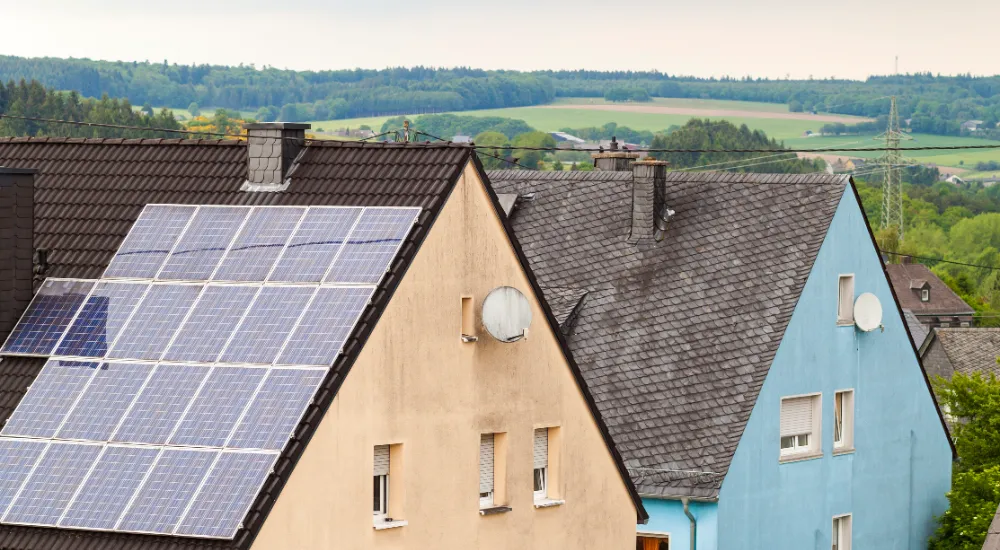
Globally, deployment of distributed9 renewable energy systems ranges from rooftop solar PV to small-scale wind power and community-owned biogas plants. Among their benefits, the decentralised deployment of renewables can support climate change adaptation and resilience across agriculture, water, health and other sectors, enhancing resilience to droughts, heatwaves and sea-level rise while creating income opportunities.10
Distributed renewables further reshape how energy is consumed, governed and produced, particularly in contrast to centralised fossil fuel power plants, and allow for local ownership.111 The increasing number of renewable energy communities and collective self-consumption has led to rising prosumerism12 and a diverse ownership structure, as seen in Germany, where private individuals owned around 30% of the total renewable energy capacity in 2019.13
Where large transmission lines are not economically or geographically viable, distributed renewable energy systems have emerged as the most efficient and cost-reliable solutions to electricity access and local economic development in rural and remote communities.14 Their rapid growth is reflected in global solar PV data: although centralised systems lead overall solar PV deployment (with 411 GW of installed capacity in 2025, concentrated heavily in the Asia Pacific region), distributed solar PV, including decentralised and off-grid systems, represents a significant share of global deployment, reaching 286 GW in 2025.15
The growth in distributed solar reflects a rising number of self-consumption and prosumer-driven markets as well as increasingly diversified ownership structures in both developed and developing economies.16 In Australia, Brazil, Japan, South Africa and established Western European rooftop PV markets, distributed installations exceeded centralised additions, whereas solar PV markets in Saudi Arabia, Spain and the United Arab Emirates remained heavily centralised.17
Off-grid solar products are a key component of distributed solar solutions, providing electricity access and resilience to households and communities beyond the reach of centralised grids, particularly in developing countries where energy access remains limited.
Globally, 10.2 off-grid solar home kits were sold in 2025, with sub-Saharan Africa leading with more than 9 million kits sold; this reflects the growing recognition of off-grid renewables as a driver of not only energy access but also local value creation and economic resilience.18
The way that solar home kits are financed is also shifting. Pay-as-you-go (PAYGo), whereby customers pay for their solar system in small instalments, and cash sales reached near-parity in 2025, with PAYGo hitting a record high of around 5.1 million sales, and cash sales dropping to a four-year low (with around 3,600 fewer sales than PAYGo globally).19 Despite inflation and currency devaluation across many markets, demand for solar energy kits, and especially PAYGo systems, continued to grow, as lower upfront costs and flexible repayment terms make it an often more accessible option than outright purchase.20 In the African market, PAYGo has overtaken cash sales for the first time, driven by rising demand for multi-light and small solar home systems (11-20 Wp) increasingly bundled with appliances.21 However, in conflict-affected areas, where 64% of people lacking electricity access live, PAYGo system costs are still 57% higher, posing a persistent affordability challenge for the most vulnerable populations.22
Policies supporting distributed renewable energy generation more broadly are now widespread, with 92 countries implementing at least one financial compensation mechanism such as feed-in tariffs, net metering or net billing as of 2025.23 Among these, around a quarter of countries combine multiple approaches, using complementary mechanisms to support both distributed renewable energy deployment and system integration.
The evolution of these policies follows a clear trajectory. Feed-in tariffs were primarily introduced in the 2000s and early 2010s, laying the foundation for early growth in renewable energy. Net metering expanded significantly throughout the 2010s, supporting broader uptake, particularly in distributed markets. Since 2020, there has been a gradual shift towards net billing and hybrid approaches, reflecting increasing cost-competitiveness of renewables and the need for more system-oriented policy design. This progression signals a maturing of distributed renewable energy markets, where policy is moving from incentivising deployment to balancing integration, system value and cost efficiency. Yet, complementary measures such as targeted subsidies and community solar schemes remain important to ensure that the benefits of distributed renewables are broadly shared.
Data gaps for distributed renewables remain significant across three dimensions: ownership structures, market coverage, and local value creation. Most countries do not systematically track who owns renewable energy assets, making it difficult to assess whether the transition is diversifying ownership or consolidating it among large utilities and institutional investors. Off-grid and prosumer market data remain fragmented, relying heavily on industry association reporting that rarely captures informal markets. And data on local value creation and resilience outcomes of renewable energy generation is seldom disaggregated by income, gender or geography.
As of 2026, more than 120 million households in high income countries were spending more than 10% of their income on heating and cooling; this share rises to more than 20% of the lowest-income population when spending on private transport is included.24 In the European Union, 9% of the population was deemed unable to keep their homes warm as of 2024, and in the United States around 27% of households reported difficulty paying energy bills or keeping their homes at safe temperatures as of 2020.25 In 2022 energy expenditure as a share of household income in selected countries ranged from 7% in Italy to 3% in the United States, where the energy burden accounts for 6% of income for low-income households and 2% for non-low-income households.26
As of 2025, 63 countries had policies for household energy affordability with renewables and energy efficiency measures.27 Fiscal and financial incentives remained the most common policy instrument to support household renewable energy installations (such as solar PV, solar thermal) and energy-efficient appliances such as heat pumps, as well as to perform building renovations to improve insulation and thermal efficiency. A few countries enacted bans or phase-out timelines for fossil fuel-based heating, sometimes combined with support for electric heating or connection to district heating.28
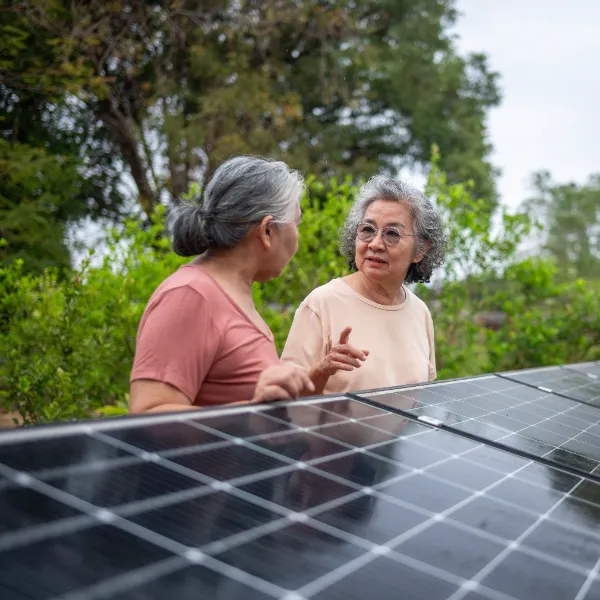
Indicators of energy affordability globally are difficult to substantiate, as data are scarce and scattered, and affordability of energy is deeply intertwined with wealth and inequality across countries and regions. Energy prices for end-users are linked to a country’s resources and energy technology mix, to global price fluctuations, and to the ownership and governance structure of energy assets, public support and market design.
Moreover, the issue of energy affordability relates to different challenges depending on the context: for example, whether there is a lack of access to energy services (see energy access section), or whether energy services are available, but at prices that low-income households cannot afford.
Affordability challenges can be measured using indicators designed to track energy poverty, such as energy expenditures as a share of available income, arrears on utility bills or the inability to keep homes warm or cool. Those indicators also present limitations, such as potential under-reporting.29 Additionally, global, harmonised data on these indicators are clearly lacking.
The decentralised nature of renewable energy allows citizens, communities, co-operatives and private companies to own, control and operate energy assets directly, often also fostering wider societal support for the transition. A renewables-based economy therefore reshapes not only how energy is produced and consumed, but also how it is governed.
As of March 2026, 114 policies on renewables-based community energy and citizen engagement were in place across 41 countries, of which 9 policies were adopted in 2025 or early 2026.30 European countries account for the largest share of policies, reflecting the catalytic role of EU legislation, particularly the Renewable Energy Directive, in mandating Member States to establish enabling frameworks for community energy.31 This regulatory push remains largely absent in other regions of the world, leaving the vast majority of countries without any community energy or citizen engagement policies.
Across countries, policies address two broad dimensions. The largest portion of identified policies focuses on the development of renewable energy communities, often defined as locally rooted, member-controlled entities that own and develop renewable energy projects primarily for the environmental, economic or social benefit of their members or surrounding communities.32 Although most countries have focused on establishing legal and regulatory frameworks for energy communities, a growing number have introduced financial support mechanisms, such as grants, subsidies, tax incentives, feed-in tariffs, and soft loans, to accelerate the development of these communities.33
A smaller strand of nine existing policies comprises citizen engagement in large-scale renewable energy deployment, through participatory siting processes and local benefit-sharing mechanisms. Denmark has established a comprehensive set of compensation and benefit-sharing mechanisms, including municipal green funds, neighbour bonuses, property value loss compensation, and acquisition options, to foster local acceptance of renewable energy installations.34 Moving beyond acceptance, policies in Canada encourage the active participation of Indigenous communities, securing their long-term revenue and equity ownership in renewable energy communities.35
However, many communities worldwide still lack the institutional, regulatory and financial frameworks needed to meaningfully participate in, or benefit from, the energy transition. Participatory frameworks – such as mandatory stakeholder consultation, standardised benefit-sharing agreements and clear mechanisms that promote co-ownership – are essential to ensure local value retention and citizen participation in energy transitions.
Crucially, national policy adoption does not automatically translate into progress on the ground. The number of energy communities offers a first indicator of real-world uptake, but quantitative metrics fail to capture the size, quality, depth of engagement, and long-term financial viability and social impact of individual communities. Consequently, establishing qualitative frameworks to actively monitor and scale up substantive citizen engagement must be treated as a non-negotiable prerequisite for ensuring that community energy drives a fair and democratic renewables-based economy.
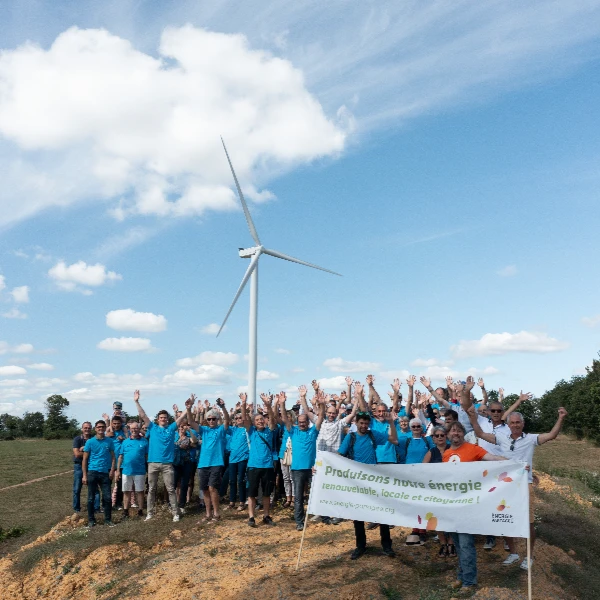
Tracking of renewable energy communities globally is important to the renewables-based economy, as localised ownership models are vital for participatory governance and decentralized energy planning. Western Europe is home to the greatest share of renewable energy communities. As of 2022, the Netherlands led the region in the total number of initiatives – with 846 legal registrations, or roughly 25% of the identified EU total – driven by a national goal of 50% local ownership of all land-based renewable energy by 2030.36 Meanwhile, Germany had the highest total installed capacity in these communities. The growth in European renewable energy communities shows progress and interest in these initiatives; however, as of 2026 the EU had reached only 27% of its objective to have one energy community per large municipality by 2025, with several Member States leading the way.37
As of 2022, solar PV was the dominant technology in renewable energy communities, accounting for 56% of technologies featured in European projects.38 This preference for solar is likely due to its scalability and suitability for both urban and rural community ownership, lower upfront investment requirements and generally simpler permitting frameworks for small-scale projects.39 Wind energy is the second most prevalent technology in European energy communities, accounting for 26% of the total, while hydropower accounts for 15%.40 The significant share of hydropower suggests that established energy communities are using large-scale renewable energy technologies to increase their energy production as they acquire the necessary expertise and investment.41
Data on renewable energy communities and citizen engagement remain fragmented and incomplete. Differences in legal energy community definitions and reporting frameworks limit comparability across countries, while many local, informal or community-led initiatives are not captured in official policy or regulatory datasets. Data on the number of energy communities are largely concentrated in Europe, with fragmented availability in other regions. As a result, tracking progress solely by the number of communities provides only a partial picture.
More robust approaches are needed to capture qualitative dimensions such as social impact, mitigation of energy poverty, and the depth and quality of participation, including how stakeholder input is reflected in decision making. Strengthening alignment between local and national planning processes, alongside improved global tracking of policies, is essential to better understand how community energy contributes to a more inclusive and equitable renewables-based economy.








.svg)
.svg)