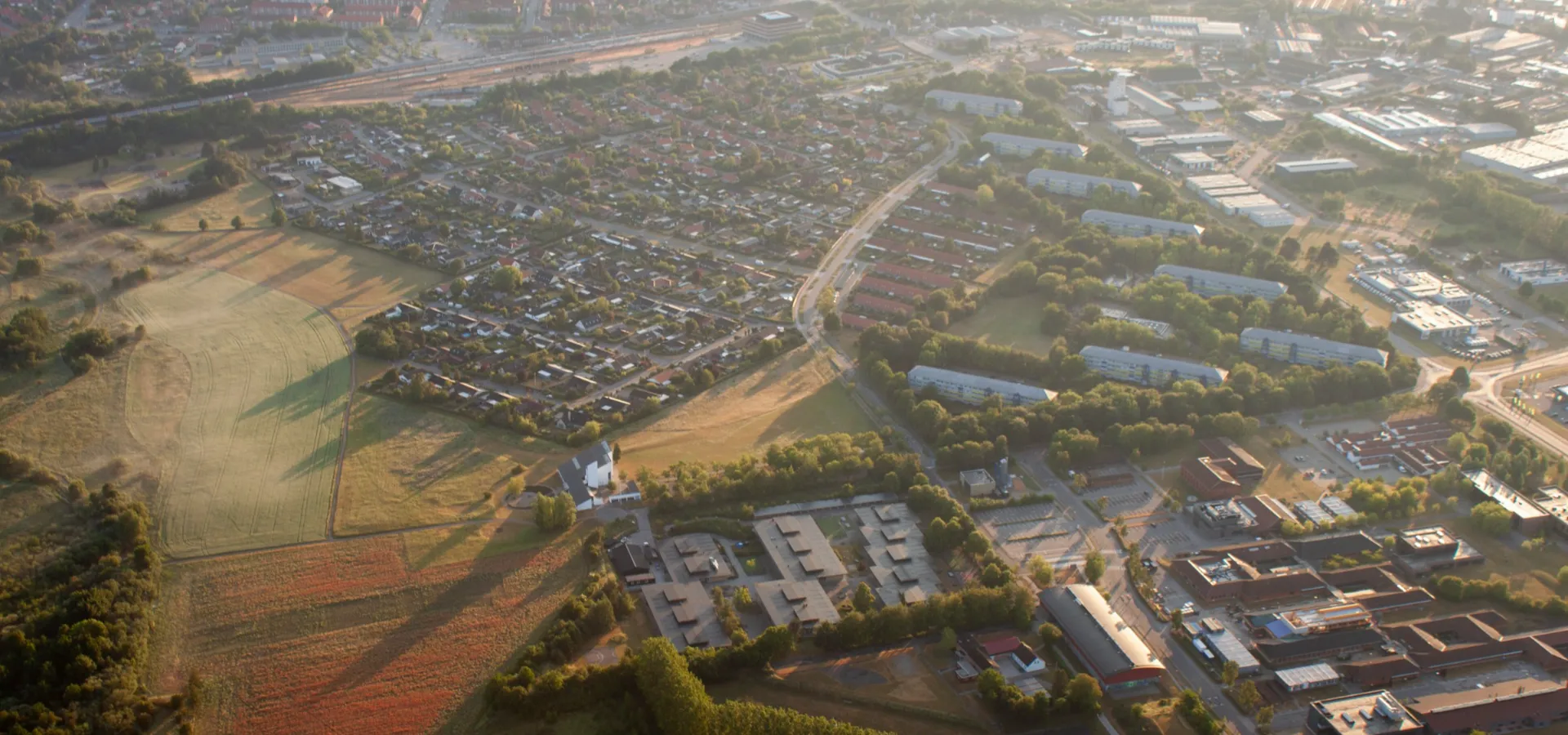


Over subsequent decades, a comprehensive decarbonisation pathway developed, linking energy policy with broader economic and environmental objectives.2
Denmark has demonstrated relative decoupling of economic growth from energy consumption and greenhouse gas emissions, with energy intensity declining significantly since 2000 and a reduction in primary energy consumption despite continued economic growth.3
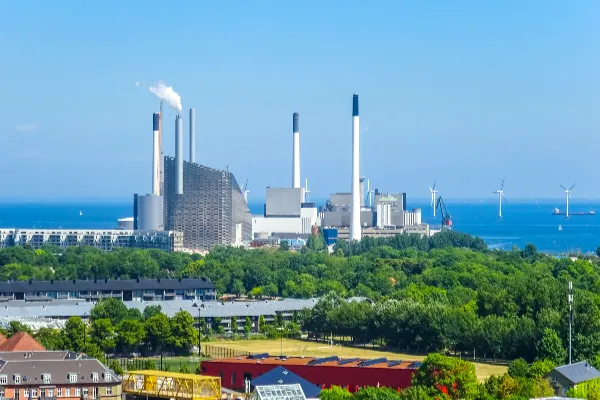
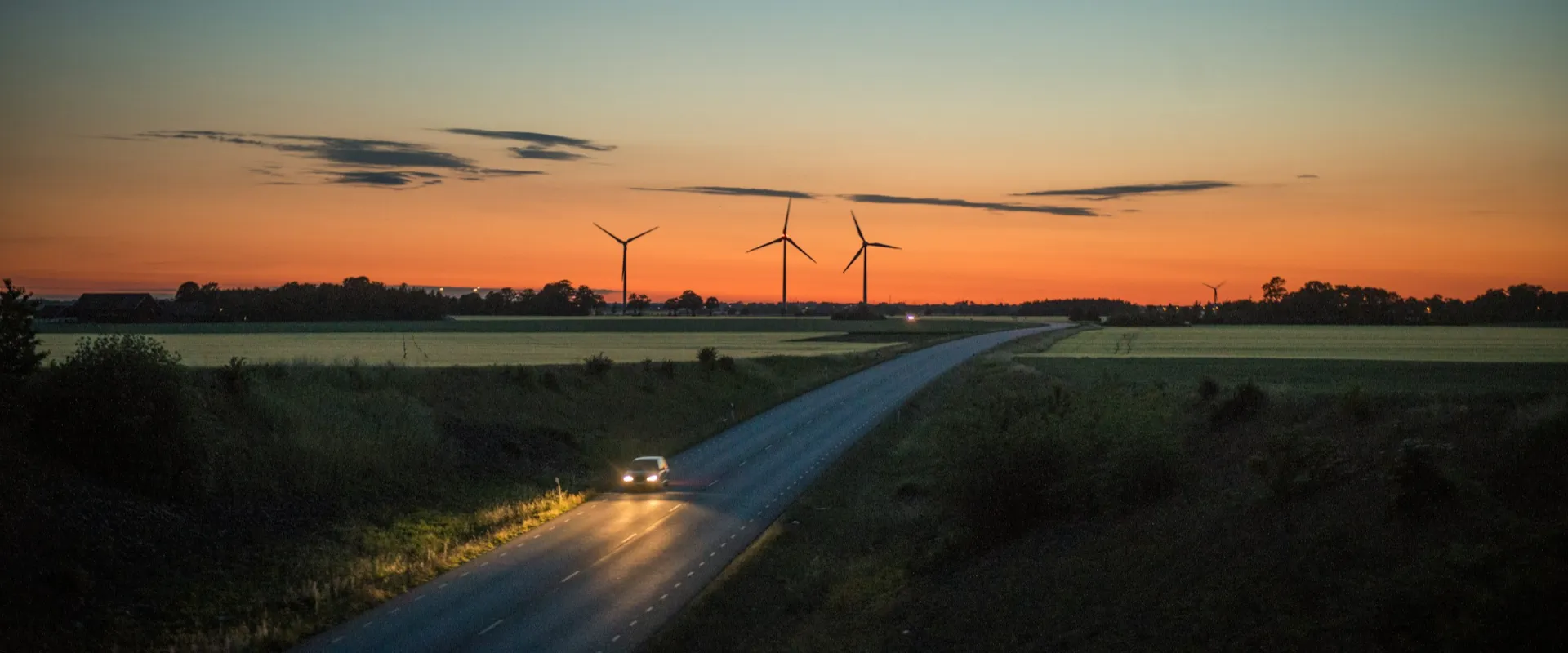
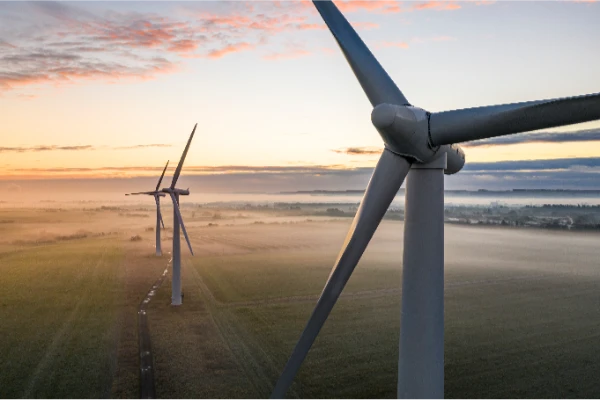
Denmark has built an electricity system based on renewables, underpinned by a legally binding commitment to climate neutrality by 2045 and encouraged by a range of policy initiatives.4 Wind energy supplies around 60% of the country’s electricity generation, forming the backbone of the power system, while the share of coal has declined to near zero.5
Early renewable energy policies enabled the emergence of globally competitive firms in wind power and related technologies. Denmark has positioned itself as an exporter of renewable electricity, green fuels, and energy technologies, particularly in European markets.6 Renewables and other low-carbon technologies and services transitioned from a niche sector into a primary driver of national economic growth, providing tens of thousands of jobs.7 As of 2023, Denmark’s exports of energy technology and equipment represented around 10% of the country’s total commodity exports.8
The energy transition extends beyond electricity, encompassing heating, transport, industry and agriculture within an integrated, low-carbon system.9 Between 2000 and 2023, the renewable share in Denmark’s total final energy use increased from 5% to 45%, while the share of renewables in electricity consumption rose from 16% to 82%. Both coal imports and carbon dioxide (CO2) emissions from energy consumption fell significantly during this period, while Denmark’s gross domestic product (GDP) grew from USD 263 billion to 378 billion.10
Renewable generation was supported by feed-in tariffs in the 1990s and early 2000s, creating stable market conditions that enabled wind power to grow from around 2% of electricity in 1990 to around 20% by 2003.14 Offshore wind tenders and competitive auctions have driven cost reductions and large-scale deployment, with capacity exceeding 2.3 gigawatts (GW) by 2023 and projects increasingly operating without subsidies.15 Solar PV has expanded rapidly to nearly 15% of electricity generation, complementing wind through seasonal balancing, while bioenergy contributes nearly 20% of electricity, primarily through combined heat and power (CHP) plants.16
Denmark manages high shares of variable renewable power through system-wide flexibility – including CHP plants, sector coupling and demand response – as well as regional interconnectors.17 By 2015, Denmark had built 7.2 GW of interconnection capacity, enabling the export of surplus wind power to its neighbours and the import of dispatchable hydropower, thereby reducing the need for domestic backup capacity.18 This flexibility enables Denmark to maintain a grid reliability of 99.99%, with the average power loss limited to less than 40 minutes per year.19
The ongoing development of energy islands aims to allow for the aggregation of offshore wind power and cross-border energy trade.20 The Bornholm Energy Island will link the Danish and German grids, while the artificial North Sea Energy Island aims to reach 3 GW of offshore wind power by 2033, with long-term potential up to 40 GW.21
District heating supplies roughly two-thirds of Danish households and is a key interface between electricity and heat systems.22 In 2024, the bulk of Danish district heating production was from wood biomass, followed by non-bio waste and biowaste.23 The electrification of heat via large-scale heat pumps enables the absorption of surplus renewable electricity and its storage as thermal energy.24 Emerging low-temperature district heating systems promise to further reduce losses while integrating surplus industrial and urban heat.25 Of the 375 Danish district heating companies, 81% are consumer-owned co-operatives.26
Denmark is investing heavily in power-to-X systems in an effort to decarbonise sectors that are hard to electrify.27
These technologies convert renewable electricity into hydrogen and synthetic fuels, enabling the use of surplus generation in industry, shipping and aviation.28 Denmark aims to deploy up to 6 GW of electrolysis capacity by 2030, supported by the development of dedicated hydrogen infrastructure, pipelines and long-term energy storage.29
In transport, electric vehicle targets and a phase-out of fossil-fuelled vehicles have supported strong growth in electrification, with roughly two out of every three new cars registered in 2025 being electric.30 Electrification of heavy road freight is accelerating, supported by subsidies and emissions-linked toll systems.31 Denmark is also a leader in maritime decarbonisation, with green fuels such as e-methanol driving innovation in global shipping.32
In agriculture, biogas production is based primarily on waste, particularly manure, converting methane emissions into an energy resource, supplying gas, heat, electricity and increasingly transport fuels.33 The Green Tripartite Agreement – negotiated by government, industry and civil society – introduced a livestock emissions tax and land-use reforms aiming to integrate farmers into the transition.34
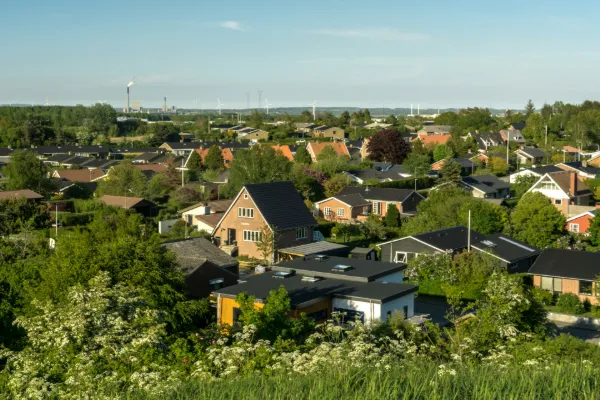
In absolute value, Denmark consistently ranks among the most expensive countries in the European Union (EU) for household electricity; in the second half of 2025, prices were the EU’s fourth highest and around 14% above the regional average. When prices are adjusted for purchasing power, however, Denmark’s ranking falls to 35% below the EU average, reflecting the country’s high GDP per capita and high overall cost of living.35
On the supply side, wholesale prices have been determined by the European market since Denmark liberalised its electricity sector in 1999 and integrated into the Nord Pool exchange. Through the merit order mechanism, renewables, with near-zero marginal costs, are dispatched first, but when consumption exceeds output, gas-fired plants set the marginal price, transmitting global fossil fuel price signals directly to Danish consumers.36
The electricity price itself is only a small share of what consumers pay. In 2025, taxes and levies accounted for 48% of the total household electricity tariff on average – the highest share in the EU and nearly double the regional average of 28%. Taxes and levies include the 25% value-added tax (VAT), the electricity excise tax (elafgift), a CO2 tax, a nitrogen oxide (NOx) tax and an energy-saving fee.37
This fiscal architecture is not a product of the energy transition: the elafgift was introduced in 1977, and VAT at 25% contributed to make Denmark one of the most expensive EU countries for household electricity well before large-scale deployment of wind power began. The Public Service Obligation (PSO) levy, which financed feed-in tariffs and renewable energy subsidies, was layered progressively onto this already heavy base from the late 1990s onwards. Parliament approved the PSO’s gradual abolition over 2017-2022, with support for renewables thereafter shifting to the general state budget.38
From 1 January 2026, the government reduced the elafgift to the EU legal minimum for at least two years.39 The cut reflects the policy shift established in Denmark’s 2018 Energy Agreement linking reduced electricity taxation to the adoption of electric appliances such as heat pumps, recognising that affordable electricity is a prerequisite for demand-side decarbonisation.40
Denmark’s energy transition is underpinned by a stable, legally binding governance framework that aligns long-term climate targets with continuous policy implementation.41 The Danish Climate Act mandates a 70% emissions cut by 2030 and eventually climate neutrality, embedding these goals in a system of rolling five-year targets and annual climate programmes.42 A “no backsliding” rule ensures that ambition cannot be weakened over time, reinforcing policy credibility and investor confidence.
This framework is complemented by cross-party energy agreements, which provide political continuity and align public and private actors around shared transition goals, reducing investment risk.43 Institutional oversight is provided by the Danish Council on Climate Change, which evaluates policy effectiveness, identifies emissions gaps, and delivers evidence-based recommendations, strengthening accountability and ensuring responsiveness within the governance system.44
Established in 1973 as Dansk Olie & Naturgas A/S (DONG) by the Danish government to reduce national dependence on imported oil, Ørsted illustrates how strategic industrial policy and market development can build a globally competitive renewables sector from the ground up.45 Originally focused on extracting oil and gas from the North Sea, DONG remained one of Europe’s most coal-intensive utilities into the 2000s, with fossil fuels accounting for 85% of its heat and power production.46
A combination of public opposition to fossil fuels, tightening renewable energy policy frameworks and falling gas revenues prompted a strategic reorientation from the late 2000s.47 The company began closing coal plants, cancelling new fossil fuel projects and scaling up the development, construction and operation of offshore wind farms.48 As strategic supply chains were established, offshore wind achieved cost parity with coal- and gas-fired generation by 2016.49 In 2017, the company renamed itself Ørsted (after the Danish scientist who discovered electromagnetism), divested its oil and gas assets, set its first emissions target by 2025, and later expanded this to a net zero target covering the full value chain of emissions (Scopes 1, 2 and 3) by 2040.50
Today, Ørsted operates 10.2 GW of installed offshore wind capacity with a further 8.1 GW under construction, employing around 7,700 people and reporting a profit of EUR 3.9 billion (USD 4.5 billion) in 2025.51 By that year, the company had reduced emissions from energy generation and operations 98% relative to 2006, with renewables accounting for 99% of Ørsted’s energy generation.
Environmental commitments also extend to circularity, with a commitment to re-use, recycle or recover 100% of decommissioned wind turbine blades, while all new projects are required to adopt net-positive biodiversity targets.52
Ørsted‘s trajectory has not been without setbacks. In 2023, a confluence of high interest rates, inflation and supply chain disruptions led to project cancellations, major financial write-downs and workforce reductions.53 Offshore wind tenders in Denmark, Germany and the United Kingdom attracted zero bids that year.54 Dividends were suspended for 2023-2025, and the company withdrew its 2030 installed capacity target.55 In early 2025, the United States suspended Ørsted’s work on a USD 5 billion offshore wind project, contributing to a sharp decline in the company’s market value.56 A federal court later allowed the US offshore project to resume. When its current projects are complete, Ørsted will have the capacity to power over 30 million people with offshore wind, with further development focused on Europe and select Asia-Pacific markets.57
By the end of 2025, the company had regained its viability, reporting a USD 484 million profit, investments of USD 8.5 billion and an overall installed renewable energy capacity of 18.5 GW.58 Ørsted’s transformation from a fossil fuel utility to the global leader in offshore wind illustrates how strategic reorientation, supply chain integration and long-term policy alignment can underpin a successful renewable energy industry – and offers a reference model for the shift towards a renewables-based economy.
Taken together, these dynamics show a transition that is technically advanced and continuously managed through iterative policy learning and system-wide coordination.
.jpg)
Glen Wright, REN21
Jad Baba
Emily Océane Hommerich
Janne Luise Piper
Andrea Wainer
Jiayi Wang
Matteo Bianciotto – International Hydropower Association
Nhat Do – International Institute for Sustainable Development
Laura El-Katiri – International Network for Energy Transition Think Tanks
Nadeem Goussous – International Renewable Energy Agency
Diala Hawila – International Renewable Energy Agency
Lauren Hermanus – Southern Transitions
Dave Jones – Ember
Uni Lee – Ember
Gondia So Seck – International Renewable Energy Agency
Rohit Sen – ICLEI – Local Governments for Sustainability
Stephan Singer – Climate Action Network
Anuj Xess – Council on Energy, Environment and Water
Lisa Mastny (Editor)
89up (Design)
REN21 Secretariat, Paris, France



.webp)
.svg)
.svg)