Case Study
Economy
Energy

China

How industrial policy, infrastructure and large-scale deployment of renewables are reshaping China’s energy transition

China’s energy transition has unfolded at an unprecedented scale, driven by rapid economic growth, rising energy demand, and strategic efforts to reduce emissions, strengthen energy security and build global industrial leadership.

While coal continues to play a dominant role, China has simultaneously become the world’s largest investor, producer, manufacturer and deployer of renewable energy technologies.

In 2025, China’s fossil electricity generation fell by 0.9%, and its energy-related carbon dioxide (CO₂) emissions declined by around 0.5%. China achieved this while maintaining a 5% growth target for gross domestic product (GDP) through high levels of renewable energy deployment and a strong increase in energy efficiency across the economy, by more than 3% and twice as much as the rest of the world.1

Scaling Renewable Power Systems

China’s renewable power expansion has been driven by strategic state planning, industrial policy and sustained public support through subsidies and other market incentives. Since 1996, China has included the development of “new energy”2 in its Five-Year Plans, with a focus on power generation.3

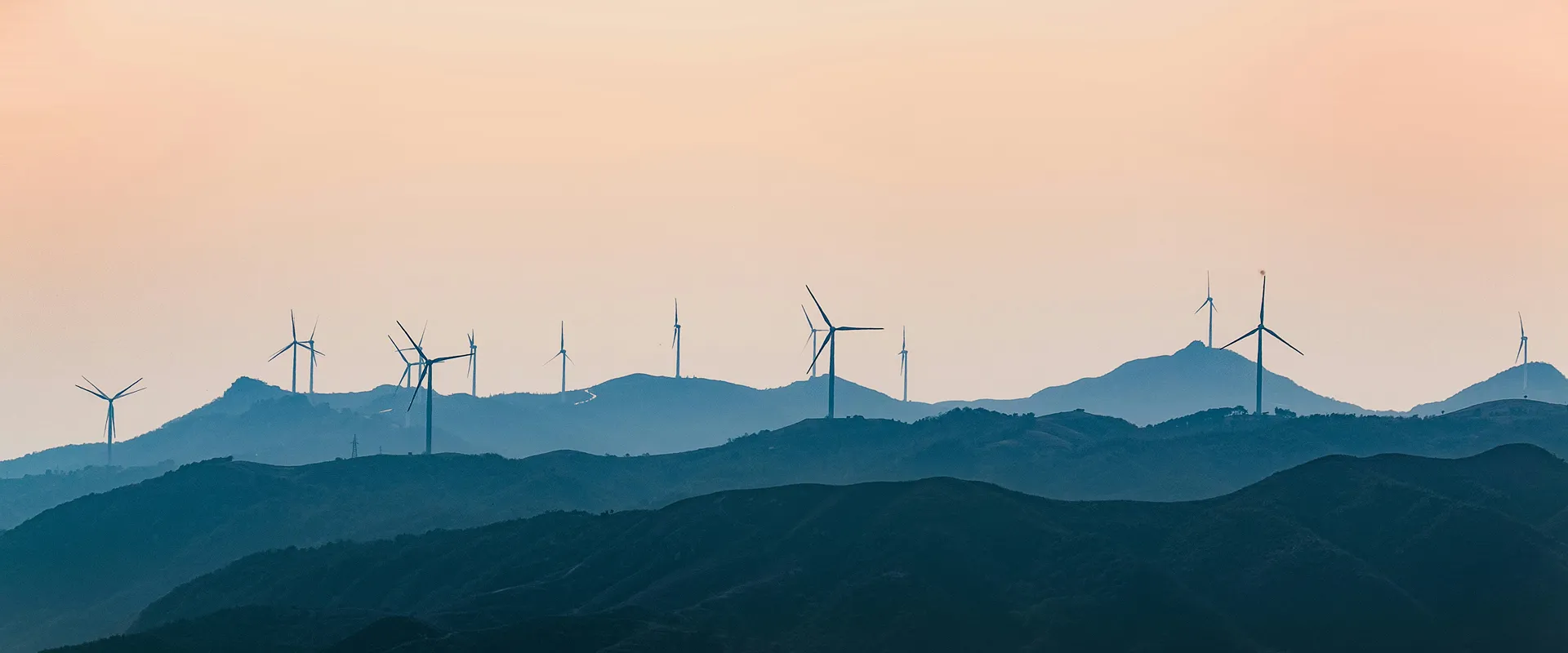
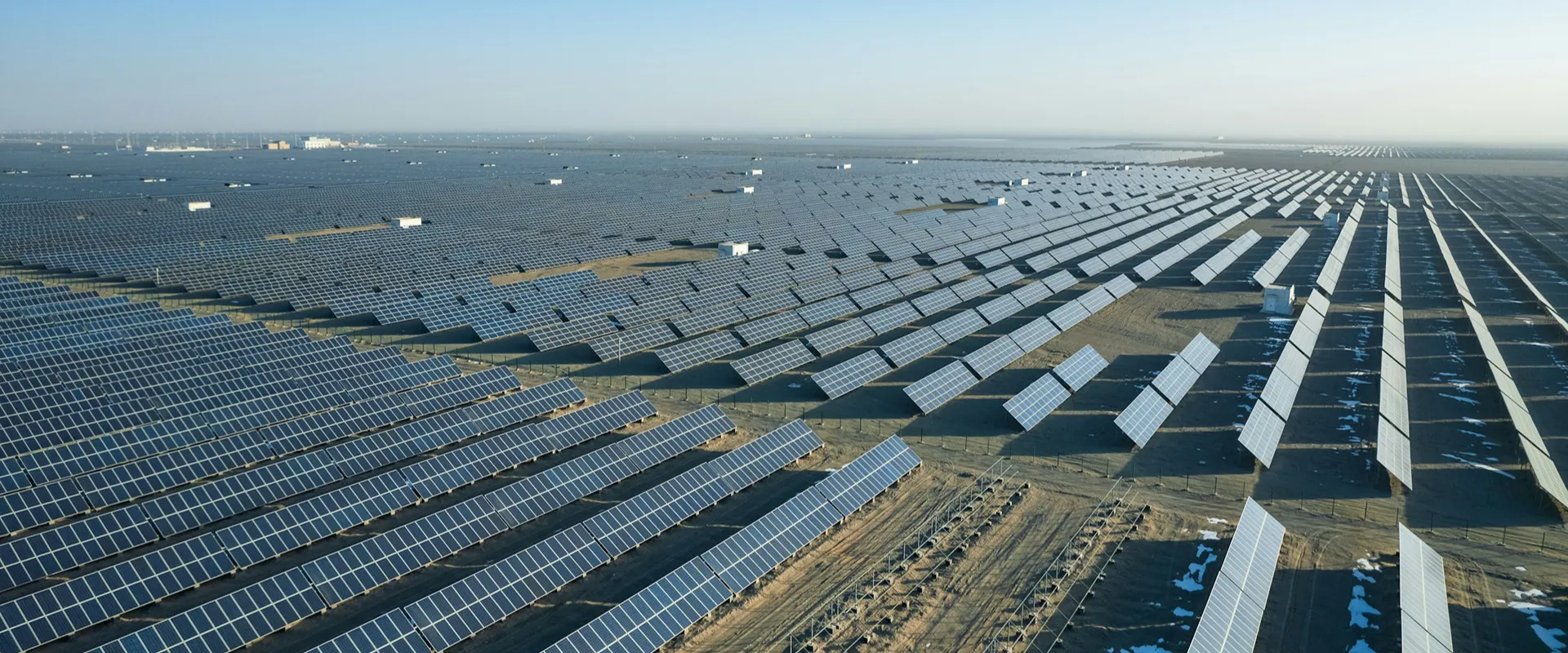
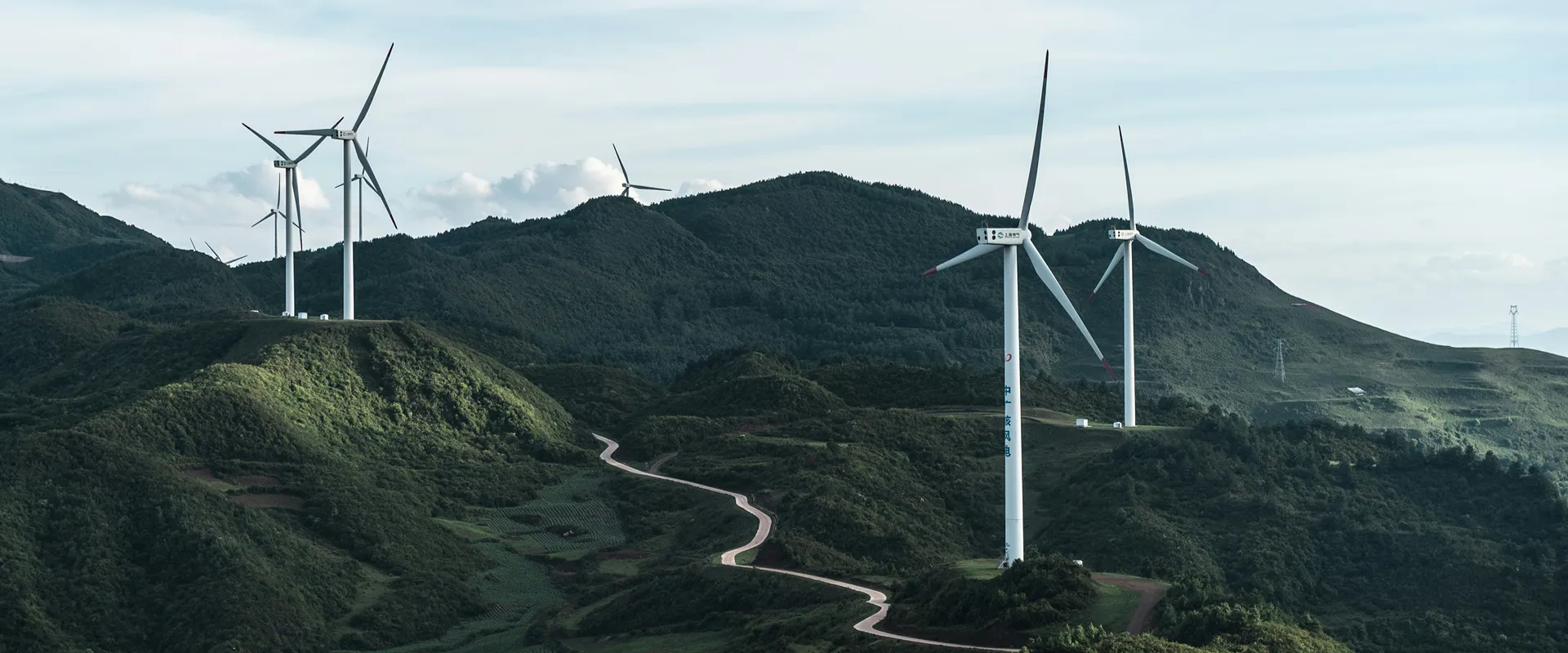
China has built the world’s largest installed capacity of solar and wind power, accounting for more than 50% of global solar additions and 68% of global wind additions in 2025.4 Together, the country’s solar and wind capacity reached 1,840 gigawatts (GW) by year’s end, overtaking installed thermal power5 capacity by around 300 GW.6 Hydropower remained a major backbone of the electricity system (13.2%), while nuclear energy accounted for 4.6%.7

Grid expansion has been critical to this growth. Ultra-high-voltage (UHV) transmission lines connect resource-rich western regions to demand centres in the east, enabling large-scale integration of variable renewables such as wind and solar. China’s first UHV network expanded from an initial 640-kilometre project in 2009 to more than 62,000 kilometres across 46 completed projects by the end of 2025.8

Power system flexibility is anchored by pumped storage, the backbone of China’s energy storage systems, with capacity exceeding 66 GW in 2025 and on track to reach 120 GW by 2030.9 Alongside this, China is rapidly expanding new energy storage technologies10, primarily lithium-ion batteries, whose cumulative installed capacity reached 136 GW in 2025 after newly installed capacity increased 84%.11 Power demand response measures12 such as time-of-use tariffs and advances in storage technologies further support renewable energy integration.

Industrialisation and Global Value Chains

Renewable energy and energy efficiency across all economic sectors has become a central pillar of China’s industrial strategy. Driven by the Strategic Emerging Industries framework and subsequent industrial policies, the country has mobilised fiscal resources and regulatory authority at significant scale to build substantial technological and innovation capacity and integrated supply chains spanning raw materials, processing, manufacturing and deployment. As a result, China dominates global manufacturing across key renewable energy and enabling technologies.

This industrial expansion has generated significant economic benefits and employment while positioning China as a leading exporter of renewable energy and enabling technologies. Investments and production of goods and services in these industries reached a record contribution to GDP of RMB 13.1 trillion (USD 1.8 trillion) in 2025, accounting for around 9.3% of China’s GDP.13 The main drivers are batteries, electric vehicles and the solar industry.14 In 2024, China’s renewable energy industry supported an estimated 7.29 million jobs, or 43.9% of global renewable energy employment.15
Electrification of Demand Sectors

The electrification of end-use sectors in China is driving significant new demand for electricity, directly replacing fossil fuel consumption.

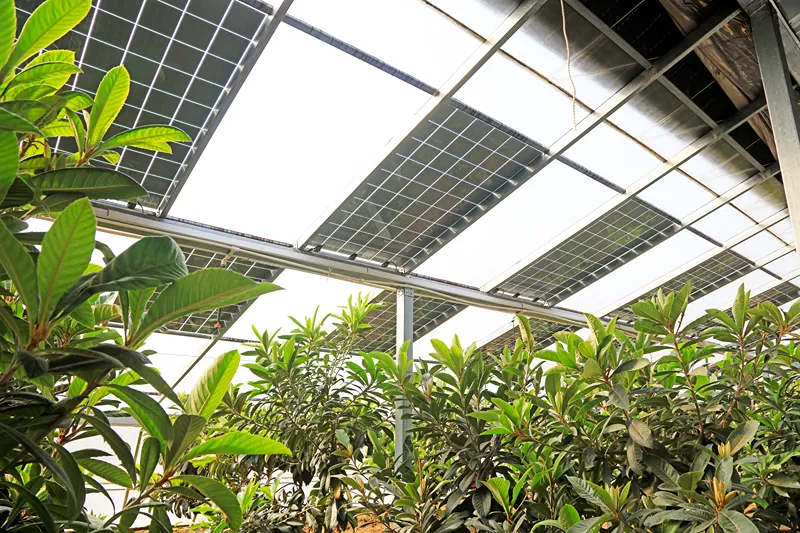
In agriculture, electrification has been driven primarily by agrivoltaics, with more than 31 GW of installed capacity by 2022.16 Across the country, regions have locally adapted models such as livestock–solar integration, aquaculture–solar integration, and photovoltaic greenhouse projects.

In buildings, China is promoting heat pumps and renewable heat sources to phase out coal- and gas-based heating systems, while advancing building-integrated solar PV to meet low-carbon electricity demands. This has made buildings the fastest growing sector for electrification, reaching 55.3% in 2024.17
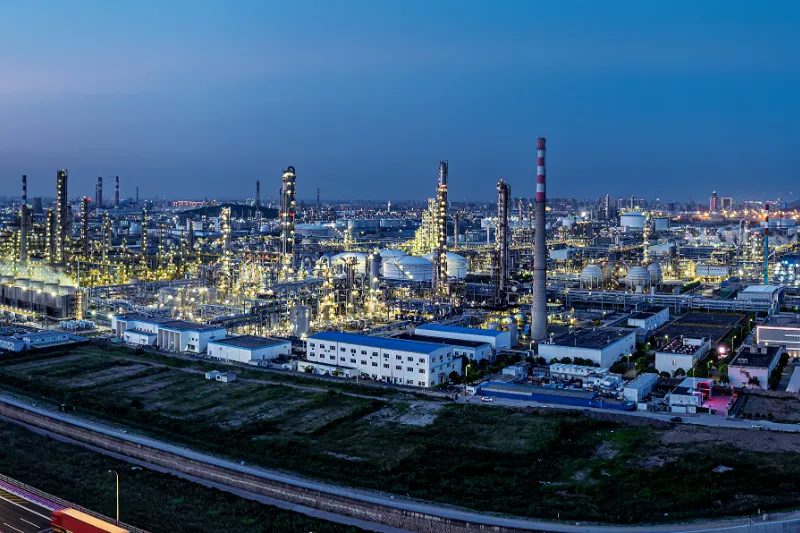
In the industrial sector, electrification and efficiency improvements are complemented by emerging deployment of electric boilers, industrial heat pumps and renewable-based hydrogen. By 2024, China’s industrial electrification rate reached 27.7%, with the four major energy-intensive industries18 accounting for around 18.4% of the total electrification rate.19
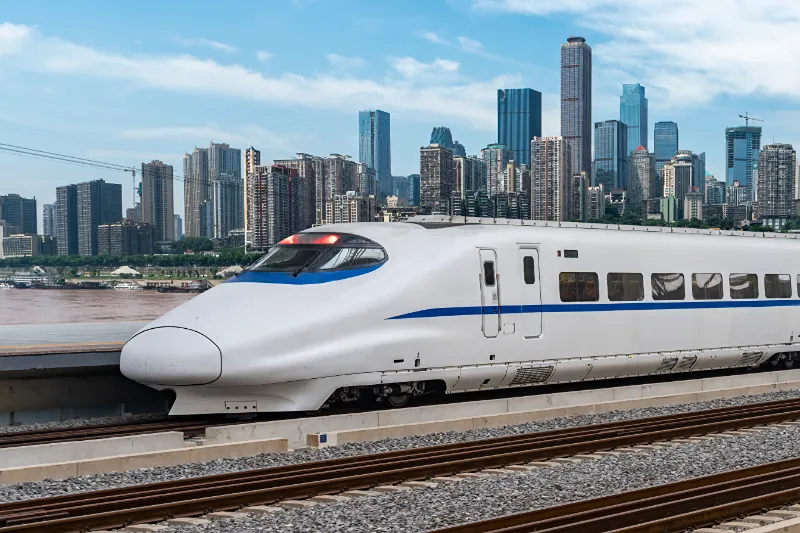
In transport, China’s sustained state support for both market uptake and domestic manufacturing capacity has led to the largest market for electric vehicles globally, with around 44 million units on the road by 2025.20 Electrified rail systems and urban transport further contribute to reducing fossil fuel dependence. Railway electrification in China expanded from 51,000 kilometres in 2012 to 123,500 kilometres by the end of 2024, covering 76% of the national railway network.21 In cities, “new energy” buses – which include battery, plug-in hybrid and fuel cell electric22 – accounted for 82.7% of the total urban public bus fleet by the end of 2024.23

Governance and Policy Frameworks

China’s energy transition is guided by a centralised governance model, combining long-term strategic planning with iterative policy implementation.

Five-Year Plans provide overarching direction, giving rise to a diverse set of policies that embed renewable energy in manufacturing, infrastructure, and technological and workforce development. The 15th Five-Year Plan further integrates renewables into national energy security goals.24 Meanwhile, the “dual carbon” targets – peaking emissions before 2030 and achieving carbon neutrality before 2060 – anchor long-term ambition.25

Early renewable energy growth in China was driven by subsidies, tax incentives and feed-in tariffs. China’s renewable energy financial support peaked at USD 66 billion in 2022.26 As the sector matured, these incentives were replaced by market-based mechanisms such as the electricity spot market, the green electricity27 market and the national emissions trading system. Meanwhile, policy attention is moving towards system integration and energy storage, with the introduction of a capacity pricing mechanism in 2026 to support grid-side energy storage.28

China’s central-local policy co-ordination combines nationally defined targets and rules with local implementation and innovation. While the central government sets strategic direction, infrastructure planning, and renewable energy consumption obligations, provincial and local governments adapt policies to local resources, facilitating project deployment through streamlined permitting, land-use support and demonstration projects.

Policy implementation is further reinforced by large-scale, long-term investments in technological innovations, renewable energy projects and infrastructure by state-owned enterprises (SOEs). Many energy SOEs have established dedicated renewable energy subsidiaries, while fossil fuel SOEs are increasingly diversifying their portfolios through investments in renewable energy. For example, China Petroleum & Chemical Corporation (Sinopec) and China National Petroleum Corporation (CNPC) have both invested in renewable hydrogen production projects.29
Challenges and Outlook

China has emerged as an important reference point for both developing and developed economies pursuing energy transitions, but it also faces ongoing challenges.

  • Coal remains a major component of the energy system (accounting for 63.9% of primary energy production in 2024), particularly for power generation and industrial use.30 As a result, China is still the largest emitter of methane.31
  • Rapid renewable energy expansion and electrification increase the need for flexibility, grid modernisation, new technologies and market design improvements.
  • Resource availability and demand centres are geographically mismatched, requiring continued investment in transmission and cross-regional co-ordination.
  • Beyond rapid industrial expansion, concerns about job quality, environmental impacts and resource use are gaining attention.
  • Even within strong planning frameworks, local economic priorities can influence transition outcomes, highlighting the importance of sustained co-ordination between national and sub-national authorities.
  • China’s dominance in renewable energy and enabling technologies raises growing considerations. Domestically, overcapacity has put pressure on profit margins and retrenchment, while internationally, geopolitical tensions and trade uncertainties have increased supply chain vulnerabilities.

These dynamics highlight that the energy transition in China is gradual and iterative, with socio-economic and environmental objectives equally critical to ongoing development.
Insights for Renewables-Based Economy Pathways

  • Strategic frameworks and phased policies can provide a stable pathway for systemic transition over time, enabling policy co-ordination and implementation to keep pace with industrial and structural change.
  • Industrial scale-up and technology innovation generate synergies that not only expand renewable energy deployment but also reduce costs, create job opportunities and stimulate the development of related sectors such as infrastructure.
  • Electrification is a key lever for transitioning demand sectors. Rapid expansion of electrified end-uses accelerates the shift away from fossil fuels while creating new demand for renewables.
  • Strategic and co-ordinated planning enables renewables-based economies.
    China’s transition highlights the importance of aligning energy, industrial and infrastructure planning across national and provincial levels to support large-scale renewable deployment, grid expansion, storage development and economic transformation.
  • Global collaborations are critical for accelerating both the domestic transition
    and international diffusion of clean technologies. Integration into global manufacturing and supply chains enabled large-scale industrial scale-up and technological exchanges.

Contributors

Lead author

Jiayi Wang, REN21

REN21 Data and Knowledge Team

Jad Baba
Emily Océane Hommerich
Janne Luise Piper
Andrea Wainer
Jiayi Wang

Special Advisors to the Renewables-based Economy Tracker

Matteo Bianciotto – International Hydropower Association 
Nhat Do – International Institute for Sustainable Development 
Laura El-Katiri – International Network for Energy Transition Think Tanks 
Nadeem Goussous – International Renewable Energy Agency 
Diala Hawila – International Renewable Energy Agency 
Lauren Hermanus – Southern Transitions 
Dave Jones – Ember 
Uni Lee – Ember 
Gondia So Seck – International Renewable Energy Agency 
Rohit Sen – ICLEI – Local Governments for Sustainability 
Stephan Singer – Climate Action Network 
Anuj Xess – Council on Energy, Environment and Water

Editing, Design And Layout

Lisa Mastny (Editor)
89up (Design)

Production And Communication

REN21 Secretariat, Paris, France

References and Notes

International Energy Agency, 2026, Global Energy Review 2026, https://www.iea.org/reports/global-energy-review-2026.
New energy refers to electricity and clean fuels derived from the conversion or use of renewableresources, including wind, solar, geothermal, ocean, biomass energy, etc.
General Office of the State Council of the People’s Republic of China, ‘中华人民共和国国民经济和社会发展“九五”计划和2010年远景目标纲要’, 1996, https://www.gov.cn/gongbao/shuju/1996/gwyb199607.pdf.
Ember, ‘Global Electricity Review 2026’, 2026, https://ember-energy.org/latest-insights/global-electricity-review-2026.
Thermal power refers to electricity generated by converting the heat produced from the combustion of fuels such as coal, oil and natural gas into electrical energy through steam turbines.
National Energy Administration, ‘国家能源局发布2025年全国电力统计数据’, 2026, https://www.nea.gov.cn/20260129/6874f211acd0417eab7ac10c3061a7c2/c.html.
Ember, ‘Key energy data for China’, 2026, https://ember-energy.org/countries-and-regions/china.
China Discipline Inspection and Supervision Daily, ‘中国特高压:绿电闪送 千里直达’, 2025, http://www.sgcc.com.cn/html/sgcc_main/gb/xwzx/yw/20260315/624985202603151420000002.shtml.
New storage technologies refer to lithium-ion batteries and other more recently scaled technologies, such as compressed air storage, flow battery, flywheel storage, gravity storage, carbon dioxide compression storage, etc.
International Hydropower Association, personal communication with REN21, 3 June 2026.
National Energy Administration, ‘国家能源局举行新闻发布会介绍2025年新型储能发展情况’, 2026, https://www.nea.gov.cn/20260130/50f657ce87f848e1a9a1861d1fd9aa23/c.html.
Power demand response measures refer to programmes that enable electricity consumers to voluntarily reduce, shift or increase their power consumption in response to grid needs in exchange for financial compensation, improving system flexibility and supporting the integration of renewable energy.
Contribution to GDP covers the following industries: electric vehicles, batteries, solar power, wind power, hydropower, electricity transmission, energy storage and energy efficiency. The exchange rate is as of June 2025; China’s GDP in 2025 was USD 19.5 trillion according to the World Bank, https://data.worldbank.org/indicator/NY.GDP.MKTP.CD?locations=CN
Carbon Brief, ‘Analysis: Clean energy drove more than a third of China’s GDP growth in 2025’, 2026, https://www.carbonbrief.org/analysis-clean-energy-drove-more-than-a-third-of-chinas-gdp-growth-in-2025.
International Renewable Energy Agency, ‘Renewable Energy and Jobs Annual Review 2025’, 2025, https://www.ilo.org/sites/default/files/2026-01/IRENA_SOC_RE_and_jobs_2026.pdf.
World Resources Institute, ‘Agrivoltaics in China: Status, Potential and Pathways for Synergistic Energy Agriculture Development’, 2025, https://wri.org.cn/sites/default/files/2025-09/25_rpt_agrivoltaics-in-china_cn.pdf.
Xinhua Net, ‘2030年全国电气化率预计达到35%左右’, 2025, https://www.nea.gov.cn/20250926/6aaeb916cc444a02b58d683ab501c26b/c.html.
These four industries are: manufacture of chemical raw materials and chemical products, manufacture of non-metallic mineral products, smelting and processing of ferrous metals, and smelting and processing of non-ferrous metals.
Xinhua Net, ‘2030年全国电气化率预计达到35%左右’, 2025, https://www.nea.gov.cn/20250926/6aaeb916cc444a02b58d683ab501c26b/c.html.
International Energy Agency, 2026, Global EV Outlook 2026, https://www.iea.org/reports/global-ev-outlook-2026.
People’s Daily, ‘电气化五十载,中国铁路领跑数智化’, 2025, http://www.china-railway.com.cn/xwzx/mtjj/rmrb/rmrb/202509/t20250909_148384.html; National Bureau of Statistics, ‘年度数据’, accessed 24 April 2026, https://data.stats.gov.cn/dg/website/page.html#/pc/national/yearData.
Battery electric vehicles are powered solely by electricity stored in batteries; plug-in hybrid electric vehicles combine a rechargeable battery with an internal combustion engine; and fuel cell electric vehicles generate electricity onboard using hydrogen fuel cells.
Xinhua News Agency, ‘我国新能源公交车占比达82.7%’, 2025, http://www.gov.cn/lianbo/bumen/202509/content_7040526.htm.
National Development and Reform Commission, ‘中华人民共和国国民经济和社会发展第十五个五年规划纲要’, 2026, https://www.ndrc.gov.cn/fggz/fzzlgh/gjfzgh/202603/U020260317369114704096.pdf.
Xinhua News, ‘习近平在第七十五届联合国大会一般性辩论上发表重要讲话’, 2020, https://www.gov.cn/xinwen/2020-09/22/content_5546168.htm.
International Institute for Sustainable Development, ‘The USD 1.2 Trillion Problem: Why every energy crisis strengthens the case for clean public finance’, 2026, https://www.iisd.org/articles/deep-dive/usd-12-trillion-problem-energy-crisis-strengthens-case-clean-public-finance.
Green electricity refers to all electricity produced by renewable power generation projects that have been registered – such as wind power, solar power, conventional hydropower, biomass power, geothermal power and ocean power – and that meet the relevant national policy requirements.
National Development and Reform Commission, ‘关于完善发电侧容量电价机制的通知’, 2026, https://www.ndrc.gov.cn/xxgk/zcfb/tz/202601/t20260130_1403524.html.
Climate Energy Finance, ‘Decarbonising China & the World: Chinese Energy SOEs Supercharge Renewable Investment in Response to the 14th Five Year Plan’, 2023, https://climateenergyfinance.org/wp-content/uploads/2023/11/FINAL-301123-Decarbonising-China-the-World_-Chinese-Energy-SOEs-Supercharge-Renewable-Investment-1-1.pdf; Xinhua Net, ‘中国石油第一个规模化可再生能源制氢项目制氢装置投产’, 2024, https://www.nea.gov.cn/2024-03/22/c_1310768585.htm.
National Bureau of Statistics of China, ‘China Statistical Yearbook 2025’, 2025, https://www.stats.gov.cn/sj/ndsj/2025/indexch.htm.
International Energy Agency, ‘Global Methane Tracker 2026’, 2026, https://www.iea.org/reports/global-methane-tracker-2026.

Built through crowd-sourced and crowd-owned data and insights

The RBE Hub is shaped by researchers, governments, industry associations and civil society organisations contributing data, analysis and expertise from around the world.

We use cookies on this site to enhance your user experience. By clicking the Accept button, you agree to us doing so. Terms of Service
cookie